remembering an old dream
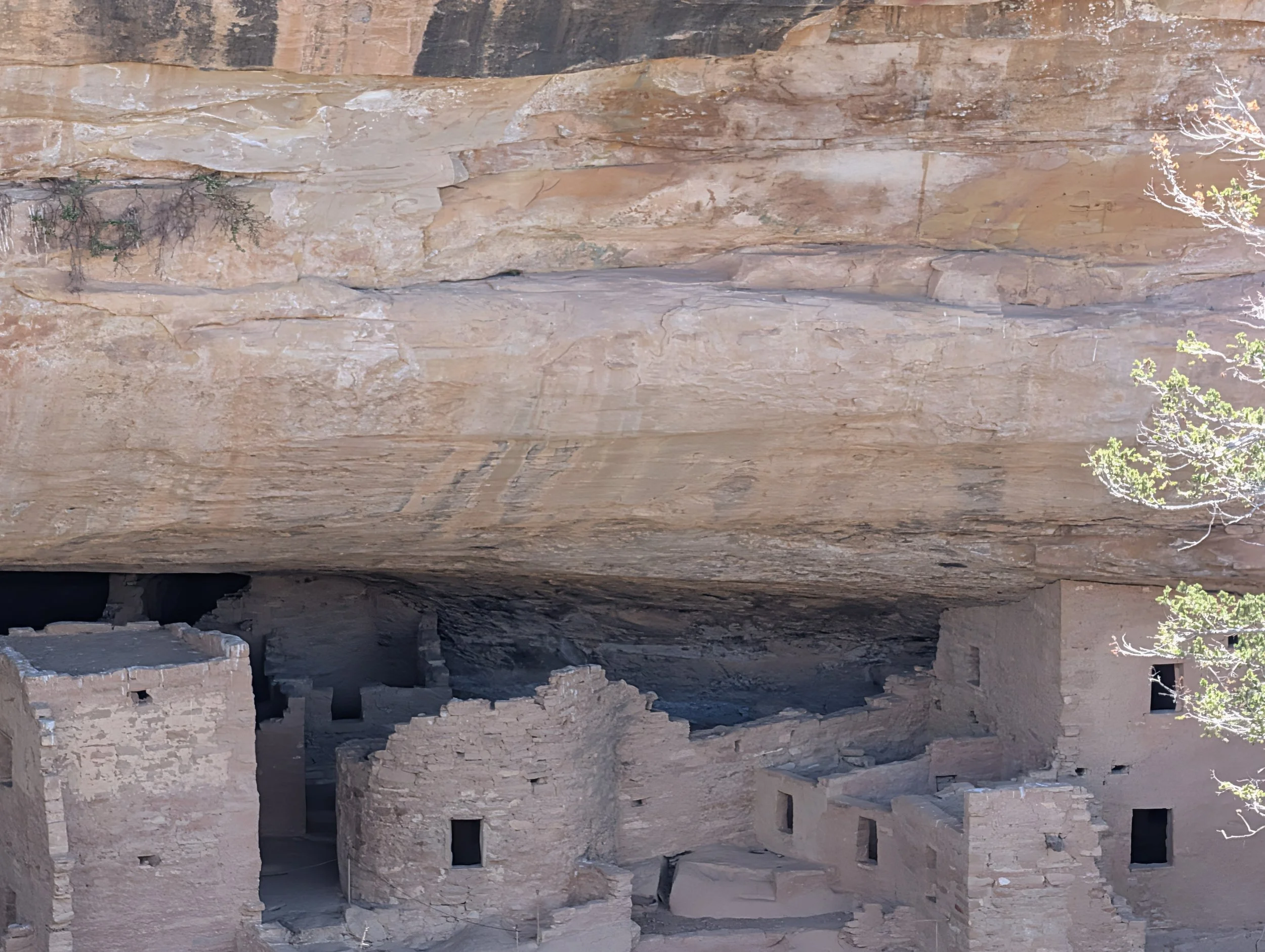
Cliffside homes at the ‘Spruce Tree’ in Mesa Verde National Park
I just came back from a road trip across the Southwest, and I’m still finding my way back into my body.
There are some trips that feel like a break from your life. And then there are the ones that make you question everything you thought you knew.
This was the second kind.
In White Sands National Park, we watched the sun set and the moon rise with a group of about 40 people. Guided by a ranger in training, we learned that the Hopi people’s relationship to the moon guides when to plant, gather, and be in ceremony.
Many other cultures have looked to the moon as a measure of time, but for the Hopi, the moon means more. Sitting in the sand, I let gypsum crystals slip through my fingers and found myself thinking about all the hands that have done the same. How many people have sat in that same light. How many faces have been held by that same moon.
Sitting in the world’s largest gypsum sand dune felt like I was suspended in an hour glass. The full moon dazzling over the white crystals reflected light that confused night for day, altering my sense of time. Or more appropriately, collapsed it, maybe.
Later in the trip, we moved through Mesa Verde National Park. Walking along the cliffs, standing beside kivas, passing through spaces that were built for ceremony, for gathering, for living. Pueblo architecture that became ruins.
There’s a particular kind of grief that comes from seeing a place labeled as “abandoned” when you can feel, so clearly, that it isn’t.
The presence of Pueblo ancestors is not subtle. It’s not conceptual. It’s there, palpable. Even my husband Bernie, a devout skeptic, felt the difference in energy.
As we left the park, we started the Mesa Verde Voices podcast, something recommended to us by the many infographics we read. Listening to descendants of the ancestral Pueblo people added a crucial layer I didn’t realize I was missing: the question of preservation.
What does it actually mean to protect a place?
Mesa Verde “protects” these structures—but that protection has meant excavation, intervention, reinforcement. Concrete added to ancient architecture, roofs built over pit houses. Decisions made about what gets to remain, and what gets to change.
And underneath that is another question:
Who decided that architecture is what needed saving most?
What about language?
What about ceremony?
What about the people whose relationship to this land never ended?
There’s a tension there that I can’t unsee now.
Between preserving something as an object, and being in relationship with something living.
That tension followed me as I learned about Chaco Canyon, a place that is sacred. Not in the past tense, it is sacred now.
Chaco Canyon is an archaeological site that is recognized by UNESCO. It’s a place of deep intelligence and alignment, where there is a cosmic connection between land, sky, and people.
There are massive stone structures oriented with the sun and the moon here, and doorways and walls that track solstices. Petroglyphs that mark solar and lunar cycles. This is a landscape that reflects a way of living where astronomy wasn’t separate from daily life—it was daily life.
I imagine this was a place where you just had to look up and around to understand your role as a part of a whole.
And at the same time, this same land is surrounded by oil and gas development. Drilling is pressing in closer each day. Decisions are being made that treat the land as resource, rather than as a relative.
It created a kind of dissonance I couldn’t shake.
How we can recognize something as sacred—and still allow it to be harmed.
How we can “protect” a place in one breath, and extract from it in the next.
The day before I left for this trip, I attended a talk by Robin Wall Kimmerer. And she said something that has been ringing in my ears ever since.
She asked us to be actively anti–Indigenous erasure.
Not just appreciative of land—but accountable to it.
To remember that the way many of us have been taught to live,, this constant taking, extracting, consuming, is not the only way. It’s just the dominant one right now.
Remembering other ways of being isn’t optional. It’s necessary.
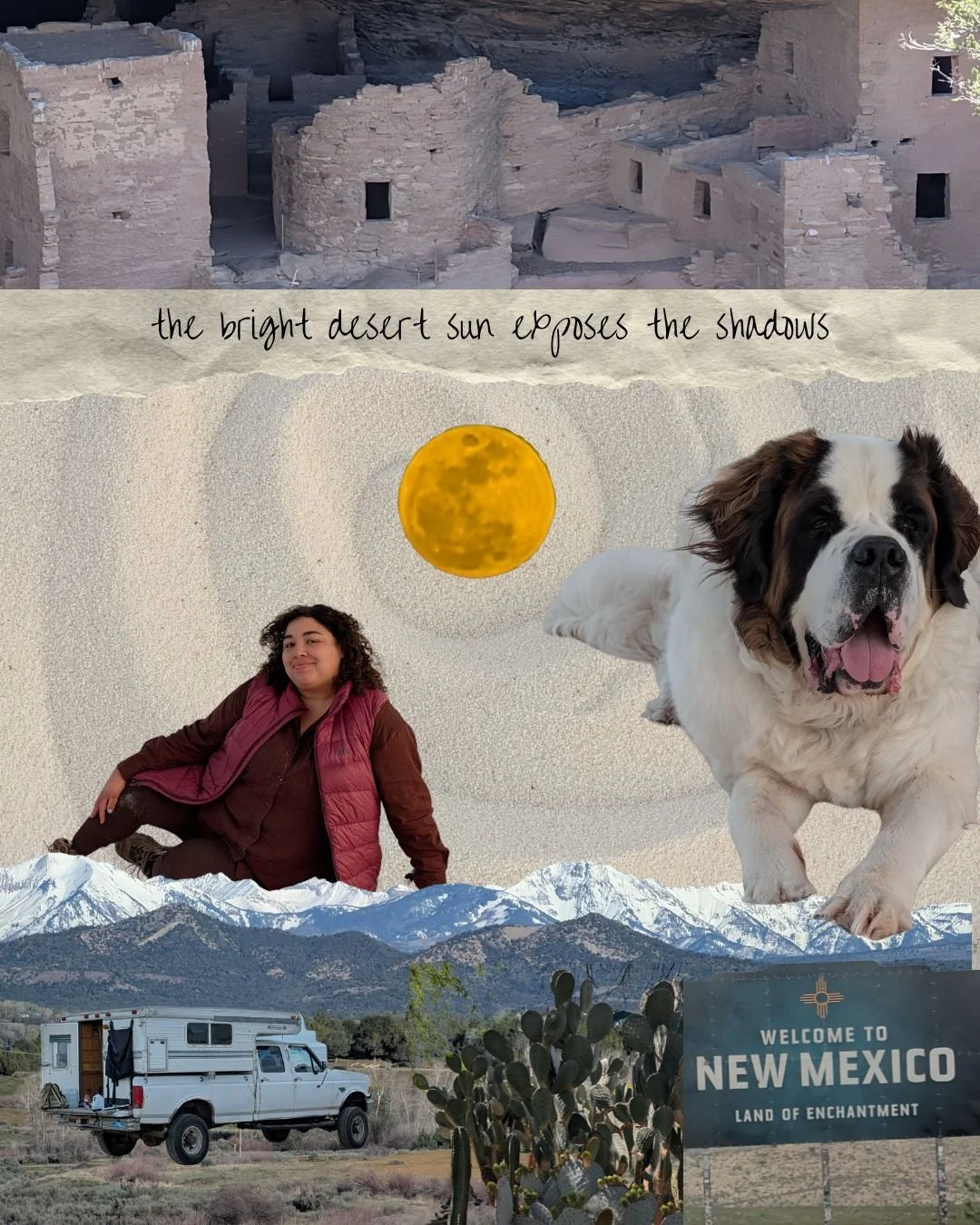
Somewhere in all of this, I started to get clearer about my own desires.
I want an expansive community.
I want land to live on, tend to, and learn over time.
I want people to grow old with.
I want more nights under the stars and less time on my phone.
I want to know the moon, not just photograph it.
And I’m realizing these aren’t new dreams.
They’re old ones.
Human ones.
Ancestral ones.
To believe this kind of life only exists in the future is a kind of forgetting.
Alchemizing these dreams isn’t about creating something entirely new.
It’s about remembering what has already existed.
Looking to the past.
Centering Indigenous and African ways of being in relationship with land, time, and community.
To expose light to the shadows of erasure.
And to choose, again and again, to remember.